

AI in Product Lifecycle Management: Smarter Descriptions, Better Customer Experiences

standard-quality-control-collage-concept

In the digital marketplace, first impressions happen in seconds – often through words. For enterprises managing thousands of SKUs, AI product lifecycle management Oracle delivers what manual processes never could: consistent, SEO-optimized, customer-ready product descriptions at scale. For product managers, creating feature-rich and accurate descriptions across large catalogs is time-consuming, error-prone, and disconnected from what customers actually want to read. Oracle Fusion Cloud changes that with AI-powered product descriptions PLM – turning dry product data into engaging narratives automatically. Why AI Is Transforming Oracle Product Lifecycle Management AI product lifecycle management Oracle is no longer a future capability – it is live, embedded, and delivering measurable results across manufacturing, retail, and high-tech enterprises today. How AI Generates Smarter Product Descriptions Automatically Oracle’s embedded Generative AI models – tuned specifically for SCM and PLM workflows – follow a straightforward three-step process: Input: Item master attributes – codes, dimensions, supplier details, use cases – are fed directly from the Oracle PLM Cloud environment. AI Processing: Oracle AI for product data management transforms raw attributes into fluent, human-readable text aligned to brand tone and catalog standards. Output: Draft descriptions in natural language – ready to review, approve, and publish across every channel. Before (Code-Only): INK-BLK-20L After (AI-Generated): Industrial Black Ink, 20-litre container. High-density formula for large-scale printing and manufacturing. Supplied by XYZ with a shelf life of 18 months. One is a code. The other is a story. Generative AI in Oracle PLM also supports: Attribute-to-sentence transformation – specs become clear, readable sentences Accuracy preservation – no creativity at the cost of compliance Catalog consistency – standard language enforced across every SKU AI Assist regeneration – descriptions can be reframed instantly without starting from scratch Oracle AI PLM: Key Capabilities and Integrations AI-powered product descriptions PLM sits within a broader set of Oracle AI capabilities across the product lifecycle: Item classification and tagging – AI recommends product categories and attributes based on historical data patterns Compliance flagging – AI identifies missing regulatory fields before products reach market Cross-channel consistency – one AI-generated description adapts to e-commerce, distributor catalogs, and mobile apps without manual rework Supplier collaboration – cleaner item data reduces back-and-forth with suppliers across regions and partner networks Inventory deduplication – consistent descriptions reduce redundant items in the catalog For companies asking how to automate product data with AI Oracle PLM Cloud, these capabilities work together as a unified layer within the existing Oracle Cloud environment – no separate platform required. Business Impact: Faster Time-to-Market with AI-Powered PLM The business case for Oracle AI PLM for manufacturing and retail is straight forward:

Read More »

Talk to Your Policy: How Conversational AI Agents Transform Insurance Queries

Talk to Your Policy

Health insurance questions never come at the right time. They arrive in moments of urgency – right before a hospital admission, while filling out claim forms, or when an unexpected medical bill lands in your inbox. Picture this: A new parent wonders: “Will my baby be covered under my policy from birth?” An employee working late asks: “Does my plan cover emergency room visits?” Another preparing for surgery asks: “What is the pre-approval process for cashless treatment?” The answers exist – but they are locked inside dense policy documents, buried across HR portals, or waiting in an overflowing inbox. By the time clarity arrives, the employee has already wasted time and experienced unnecessary stress. This is exactly what conversational AI agents for health insurance queries solve. They transform complex policy documents into a simple, always-available dialogue – giving employees instant, accurate, policy-backed answers in plain language, without waiting for HR. This is the power of natural language AI for insurance customer service – and it is changing how enterprises manage policy communication at scale. Why Insurance Queries Are Ripe for AI Transformation Insurance query management is one of the highest-volume, most repetitive challenges in enterprise HR and customer service operations. Studies consistently show that the majority of employee insurance queries fall into a small set of categories – coverage limits, claim processes, network hospitals, pre-authorization requirements, and policy exclusions. These are not complex judgment calls. They are document lookup tasks – and document lookup is exactly where conversational AI insurance automation delivers its fastest and most measurable value. The traditional model has three failure points: employees cannot find answers quickly in dense documents, HR teams spend disproportionate time on repetitive queries, and the gap between question and answer creates friction at exactly the moments employees need support most. AI insurance policy query automation eliminates all three failure points simultaneously – giving employees instant self-service access, freeing HR teams for higher-value work, and ensuring every answer is grounded in the actual policy document. How Conversational AI Agents Answer Insurance Policy Questions How conversational AI agents transform insurance queries comes down to three capabilities working together: Natural Language Understanding Employees ask questions in plain, everyday language – not keywords or form fields. NLP insurance models interpret the intent behind the question, not just the words, enabling accurate responses even when questions are phrased informally or ambiguously. Retrieval-Augmented Generation (RAG) Rather than generating answers from general knowledge, enterprise conversational AI agents use RAG to search the actual policy documents stored in your environment – returning accurate, cited answers directly from the source. No hallucinations. No approximations. Just the policy clause, explained clearly. Context-Aware Conversation Unlike static FAQs or keyword-search tools, AI insurance agents maintain conversation context across follow-up questions. An employee can ask about maternity coverage, then ask a follow-up about pre-authorization for the same topic – and the agent understands the thread without the employee starting over. Workflow Triggering When a query moves beyond information retrieval – such as initiating a claim or submitting a reimbursement form – the conversational agent triggers the appropriate downstream workflow automatically, routing to the right system or escalating to HR only when genuine human judgment is required. Oracle AI: Building Insurance Chatbots on Enterprise Data For enterprises running Oracle Cloud environments, Oracle AI Agent Studio and Oracle Digital Assistant provide a native foundation for deploying AI insurance chatbots directly within Oracle Cloud CX and HCM. Oracle AI for insurance query automation offers: Policy document grounding – agents are configured against your actual policy documents, not generic insurance knowledge bases Oracle Cloud CX and HCM integration – query handling connects directly to HR portals, benefits systems, and claims workflows within the Oracle environment Role-based access controls – employees only receive policy information applicable to their specific plan and coverage tier Audit trail and compliance logging – every query and response is logged, supporting regulatory compliance and HR governance requirements Escalation to Action Center – exceptions and edge cases are routed automatically to HR or the insurance desk without manual monitoring For organizations on Oracle Cloud, this means AI insurance policy query automation is activated within the existing platform – no separate chatbot vendor, no new infrastructure. Real-World Use Cases: Health, Life, and Property Insurance AI Health Insurance – Employee Benefits Queries The highest-volume use case. Employees ask about coverage limits, cashless hospital networks, maternity benefits, pre-existing condition clauses, and claim submission processes. AI chatbots for insurance policy lookup resolve these instantly, reducing HR query volume by up to 60% in documented deployments. Life Insurance – Policy Status and Nomination Queries Employees and policyholders ask about sum assured, premium due dates, nomination updates, and policy surrender values. Conversational AI agents retrieve this information from policy records and guide users through update workflows where applicable. Property and Asset Insurance – Claims Initiation AI agents guide policyholders through first notice of loss, documentation requirements, and claim submission steps – reducing the time between incident and claim initiation and improving the accuracy of submitted claim documentation. Group Corporate Insurance – Multi-Policy Environments Large enterprises managing multiple group insurance policies across entities and geographies use conversational AI to ensure employees receive answers specific to their applicable policy – not generic responses that create confusion across plan variants. Customer Experience Gains from AI-Powered Insurance Agents The business case for natural language processing for insurance customer service is measurable across every deployment metric: HR query volume reduced by up to 60% on repetitive policy questions – freeing HR teams for strategic and exception-based work Instant first-contact resolution – employees get accurate answers in seconds rather than hours or days 24/7 availability – insurance queries do not follow business hours; AI agents do not either Consistent accuracy – every answer is grounded in the actual policy document, eliminating the risk of verbal miscommunication from overburdened HR representatives Faster claim initiation – employees guided through submission processes immediately rather than waiting for scheduled HR availability Improved employee satisfaction – clarity at the moment of need

Read More »

Experience Claims Like Never Before: AI-Powered Swift and Simple Claims Processing

Unlocking Context

“I submitted all the documents last week – why is my accident claim still under review?” This is one of the most common questions policyholders ask. And too often, it is met with silence or vague responses. The reality is that most insurers still rely heavily on manual processes to validate claims – a task that is both time-consuming and error-prone. In high-stress scenarios – when a person is injured, a car is totaled, or medical bills are rising – speed and clarity are everything. That is why insurers are turning to AI insurance claims processing automation to handle claims with the speed, accuracy, and transparency today’s policyholders expect. The Problem with Traditional Insurance Claims Processing Insurance claims are far from simple paperwork. Each claim involves a vast array of documents – emergency medical records, police reports, diagnostic tests, repair invoices, and treatment summaries. Insurers must carefully verify every detail against complex and ever-evolving policy terms, eligibility criteria, coverage limits, and exclusions. This manual process creates four compounding problems: Volume overload – growing claim volumes overwhelm teams operating with fixed headcount, creating backlogs that delay every policyholder regardless of claim complexity Inconsistent decisions – manual review introduces human variability, meaning identical claims can receive different outcomes depending on which adjuster handles them Fraud exposure – manual review processes lack the pattern recognition capability to reliably identify fraudulent claims across high volumes Customer trust erosion – delayed and unclear claim decisions hurt satisfaction and loyalty precisely when policyholders are most vulnerable and most likely to remember the experience With automated insurance claims management with AI, each of these failure points is addressed systematically – not patched individually. How AI Transforms the End-to-End Claims Experience How AI speeds up insurance claims processing works across every stage of the claims lifecycle – from the moment a policyholder submits their first document to the moment a settlement is confirmed: Document Intake and Classification AI automatically ingests, classifies, and extracts relevant data from all claim-related documents – medical records, repair estimates, police reports, and supporting evidence – regardless of format. What previously required manual sorting and data entry across multiple systems happens in seconds, with full extraction accuracy. Policy Eligibility and Coverage Verification AI cross-references extracted claim data against the policyholder’s active coverage, exclusions, waiting periods, and benefit limits – flagging mismatches, missing documentation, and eligibility issues automatically. Every verification is logged with a documented audit trail. Damage and Liability Assessment For motor and property claims, AI models analyze submitted evidence – photos, repair invoices, third-party reports – to assess damage extent and estimate settlement ranges aligned to policy terms. For health claims, AI validates procedure codes, treatment duration, and provider network eligibility against plan rules. Fraud Detection and Anomaly Flagging AI-powered claims experience for policyholders requires the insurer to get fraud detection right. AI models analyze patterns across thousands of claims simultaneously – flagging duplicate submissions, inconsistent documentation, unusual claim timing, and behavioral anomalies that manual reviewers would miss across high volumes. Settlement Calculation and Decision Generation Based on verified eligibility, assessed damage, and applicable policy rules, AI calculates the payable settlement amount and generates a decision with a clear, documented rationale – giving policyholders transparent explanations rather than opaque outcomes. Human Escalation for Complex Cases Low-confidence determinations, disputed claims, and edge cases outside defined parameters are automatically escalated to human reviewers with a complete case summary attached – ensuring human oversight is applied where it genuinely adds value, not consumed by routine processing. Test Case: Oracle AI Capabilities for Insurance Claims Automation From First Notice of Loss to Settlement: AI at Every Step Oracle AI for insurance claims automation enterprise covers the complete claims journey: Step 1 – First Notice of Loss (FNOL) Policyholder submits claim via portal, mobile app, or customer service channel. AI immediately acknowledges receipt, confirms document requirements, and initiates the intake workflow – eliminating the manual triage step that creates the first delay in traditional processing. Step 2 – Document Collection and Validation AI monitors document completeness in real time, automatically requesting missing items from the policyholder and confirming receipt when submitted. No claim sits idle waiting for a human to notice a missing document. Step 3 – Eligibility and Coverage Assessment AI verifies policyholder eligibility, active coverage, applicable exclusions, and waiting period status against the submitted claim details – producing a verified eligibility summary within minutes of document completion. Step 4 – Assessment and Calculation Damage assessment, liability determination, and settlement calculation are performed by AI against policy rules – with every calculation documented and traceable for audit purposes. Step 5 – Decision and Communication Approved settlements are communicated to the policyholder with a clear breakdown of the decision. Partial approvals include documented rationale for each line item. Escalated cases are transferred to human reviewers with a complete AI-prepared case summary. Step 6 – Settlement Processing Approved settlements trigger downstream payment workflows automatically – connecting to billing, finance, and payment systems without manual re-entry. Customer Impact: Faster Resolution, Higher Satisfaction The measurable impact of reducing claims processing time with AI technology is consistent across enterprise deployments: 40–60% reduction in claims processing time – from submission to settlement decision, documented across AI claims automation implementations Up to 75% reduction in claim resolution time for standard, well-documented claims processed entirely within AI-defined parameters Significantly improved first-contact resolution – policyholders receive accurate status updates and document guidance at every stage rather than waiting for callbacks Consistent decision quality – identical claims receive identical treatment regardless of volume, time of day, or adjuster availability Fraud detection accuracy – AI models flag anomalies with higher consistency than manual review across high-volume claim environments Scalable operations – claim volume surges from seasonal events, weather incidents, or product launches are absorbed without increasing headcount Today’s policyholders expect more than coverage. They expect speed, transparency, and fairness. AI-powered claims experience for policyholders delivers all three – systematically, at every claim, at scale. Implementing AI Claims Processing with Rapidflow Rapidflow designs and implements AI-powered claims workflows

Read More »

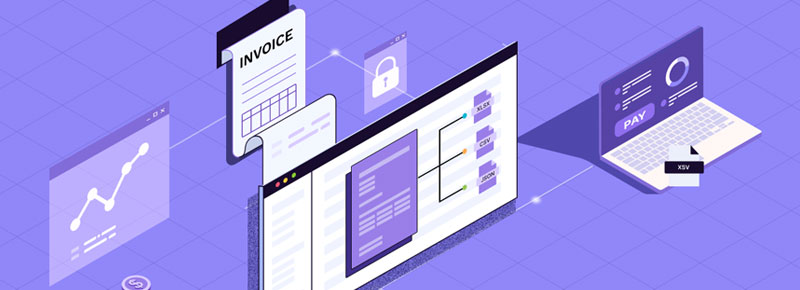
Just Ask: How Natural Language AI Is Transforming Oracle Invoice Automation

It is the end of the month and the finance manager makes a simple request: “Can someone pull all the invoices from VendorX for this quarter?” What sounds straightforward quickly becomes a manual grind. The team dives into shared folders, email inboxes, and scattered file drives – sifting through PDFs, scans, and attachments in different formats. Hours are spent copying data into spreadsheets, checking for errors, and chasing payment deadlines under pressure. Now imagine a different approach. The manager types that same request into an intelligent system: “Find all invoices from VendorX for Q2 and extract invoice numbers, due dates, and amounts.” Within seconds, UiPath AI scans every folder, understands each document, identifies the relevant invoices, and extracts the exact data needed. No digging. No sorting. No manual entry. This is the power of AI invoice automation natural language processing – and it is transforming how enterprise finance teams operate. The Problem with Traditional Invoice Processing Manual invoice processing is one of the highest-volume, most error-prone workflows in enterprise finance. The structural problems are consistent across organizations: Fragmented document sources – invoices arrive via email, shared drives, supplier portals, and paper scans with no unified intake point Format inconsistency – PDFs, scanned images, Excel attachments, and EDI files require different handling, making automation with fixed rules unreliable Manual data extraction – finance teams manually key invoice data into ERP and AP systems, creating data entry errors, duplicate payments, and missed early payment discounts Approval bottlenecks – invoice approval workflows routed manually through email chains cause delays, lost approvals, and compliance gaps No conversational access – querying invoice status, finding specific vendor invoices, or checking payment timelines requires manual system navigation rather than a simple question NLP invoice processing enterprise eliminates each of these failure points – replacing manual effort with AI that understands plain English instructions and acts on them autonomously. Natural language AI in invoice automation allows finance teams to interact with invoice systems using plain English queries and commands – asking questions like “Find all overdue invoices from VendorX above $10,000” or “Check for duplicates across August invoices” and receiving instant, accurate results. Test Case: What Is Natural Language AI in Invoice Automation? “Find all invoices from VendorX in the July folder over $5,000” “Extract due dates and amounts from this month’s scanned invoices” “Check for duplicates across folders for August invoices” “Route all three-way match exceptions to the AP manager for review” UiPath AI agents combine natural language understanding, UiPath Document Understanding, and intelligent automation to scan folders, identify relevant documents, extract structured data, and complete AP workflows – all from a plain English instruction. No coding. No manual navigation. Just ask. UiPath Agentic AI: Conversational Invoice Processing in Action Unlike basic automation that follows fixed scripts, UiPath Agentic Automation thinks, adapts, and collaborates across complex invoice scenarios – handling unstructured documents, routing exceptions, and completing end-to-end workflows without human intervention unless genuinely needed. How it works in practice: Natural Language Instruction Received Finance team member types a plain English instruction – find, extract, match, route, or query – into the UiPath interface or integrated chat channel. AI Document Understanding UiPath Document Understanding processes every relevant document – regardless of format – extracting invoice numbers, vendor details, line items, amounts, due dates, and PO references with high accuracy across structured and unstructured formats. Intelligent Matching and Validation Extracted invoice data is automatically matched against purchase orders and goods receipts – flagging discrepancies, duplicate submissions, and missing documentation for exception handling rather than passing errors downstream. Automated Routing and Approval Validated invoices are routed through approval workflows automatically based on configured business rules – amount thresholds, vendor category, cost center, and payment terms – without manual routing intervention. Exception Escalation via Action Center Invoices that fall outside defined parameters – mismatched amounts, unrecognized vendors, missing PO references – are escalated to human reviewers through UiPath Action Center with full context attached, ensuring exceptions are resolved quickly without disrupting the straight-through processing flow. Conversational Status Queries Finance managers query invoice status, payment timelines, and vendor balances in plain English at any time – receiving instant answers from live AP data without manual system navigation. From PO Matching to Payment: AI at Every Invoice Step Just ask AI to process invoices naturally covers the complete accounts payable lifecycle with UiPath: Invoice intake – AI agents monitor email inboxes, shared drives, and supplier portals for new invoices, ingesting and classifying every document automatically Data extraction – UiPath Document Understanding extracts all relevant fields from any invoice format with high accuracy – reducing manual keying to zero for straight-through invoices Three-way PO matching – AI matches invoice data against purchase orders and goods receipts automatically, flagging discrepancies for human review Duplicate detection – AI scans the full invoice history to identify duplicate submissions before payment is triggered Approval workflow automation – invoices route through configured approval hierarchies automatically based on amount, vendor, and cost center rules

Read More »
LinkedIn Icon Facebook Icon YouTube Icon
info@rapidflowapps.com

Explore Rapidflow AI

An accelerator for your AI journey