


UiPath Maestro: The Multi-Agent AI Orchestration Platform Explained
In today’s fast-moving business world, managing complex processes across different teams, systems, and tools can be overwhelming. AI agents are powerful individually – but without coordination, a collection of specialist agents is just a collection. What transforms individual agents into a coherent, enterprise-grade automation capability is orchestration.
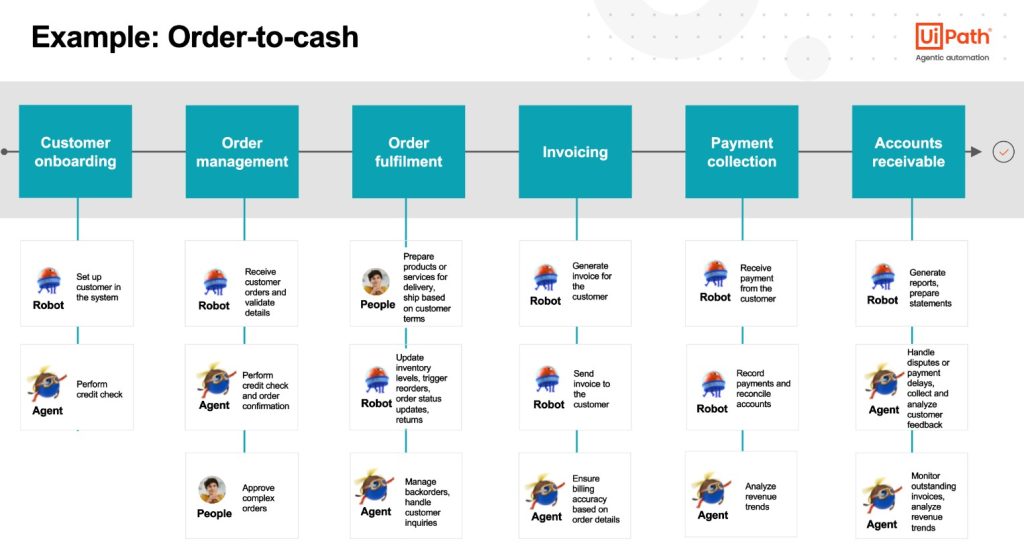
UiPath Maestro multi-agent orchestration is that coordination layer – bringing people, bots, and AI together so work flows smoothly from start to finish. Think of Maestro as the conductor of an enterprise orchestra: each instrument plays its part, but Maestro ensures every part plays in sync, at the right moment, toward the right outcome.

What Is UiPath Maestro?
UiPath Maestro is UiPath’s multi-agent orchestration platform that enables enterprises to design, coordinate, and manage complex workflows involving multiple AI agents working collaboratively – across people, bots, legacy applications, cloud platforms, and external systems.
Maestro handles the full lifecycle of complex enterprise processes – from workflow modelling and automation design through real-time execution monitoring and continuous optimization. It brings AI agents, RPA bots, human task management, and process analytics under one unified framework – giving businesses the ability to automate at scale while maintaining complete visibility and control over every step.
How UiPath Maestro Orchestrates Multi-Agent AI Workflows
How UiPath Maestro coordinates multi-agent workflows operates across four core orchestration capabilities that work together at runtime:
- Task Assignment and Routing: When a complex workflow is initiated, Maestro receives the request and decomposes it into sub-tasks – assigning each sub-task to the appropriate specialist agent, RPA bot, or human reviewer based on predefined routing logic and real-time context. A loan processing workflow, for example, routes credit check tasks to a verification bot, document review to an AI document agent, and borderline cases to a human underwriter – all coordinated by Maestro without manual triage.
- Context Passing Between Agents: Maestro maintains the shared context of the overall workflow – passing relevant information from one agent to the next as the process progresses. Each agent receives the context it needs to perform its specific function without requiring the user or preceding agent to reconstruct the situation from scratch at every handoff.
- Real-Time Monitoring and Intervention: Orchestration does not stop at task assignment. Maestro monitors every agent and bot in the workflow in real time – tracking completion status, identifying delays or failures, and enabling operations teams to intervene, adjust variables, or restart failed steps without disrupting the entire workflow.
- Human-in-the-Loop Coordination: When agent confidence is low, when a case falls outside defined parameters, or when business rules require human approval, Maestro routes the task to the appropriate human reviewer via UiPath Action Center – with full workflow context attached. Human decisions feed back into the workflow, and Maestro resumes automated processing from that point.
- Process Versioning and Governance: Maestro supports industry-standard process design using BPMN (Business Process Model and Notation) and DMN (Decision Model and Notation) – providing clear, trackable, and auditable process definitions that meet enterprise governance requirements. Process versions are managed within Maestro, enabling controlled rollout of workflow changes without disrupting running instances.
Maestro vs UiPath Orchestrator: Key Differences
UiPath Maestro vs Orchestrator key differences is one of the most common questions from enterprise teams evaluating UiPath’s agentic capabilities – and the distinction is important for deployment architecture decisions:
| Dimension | UiPath Orchestrator | UiPath Maestro |
|---|---|---|
| Primary function | RPA bot deployment, scheduling, and monitoring | Multi-agent AI workflow orchestration and coordination |
| What it manages | Traditional RPA bots and attended/unattended automations | AI agents, RPA bots, human tasks, and their coordination |
| Process design | Script-based automation configuration | BPMN and DMN visual workflow modelling |
| Human task management | Limited – action items via Action Center | Native – human tasks fully integrated into orchestrated workflows |
| Agent coordination | Not designed for multi-agent orchestration | Core capability – task delegation, context passing, agent sequencing |
| Analytics | Bot performance and queue monitoring | End-to-end process analytics including agent, bot, and human performance |
| Audience | Automation developers and IT administrators | Process owners, developers, operations teams, and analysts |
| Best for | Structured, scripted RPA deployments | Complex, multi-step workflows combining agents, bots, and humans |
UiPath Maestro Architecture and Design Patterns
UiPath Maestro enterprise multi-agent automation guide architecture follows a layered design that separates process modelling from execution from monitoring:
- Process Design Layer: Visual BPMN and DMN tools allow process owners to design workflows, define decision rules, and manage process versions – without coding. Process designs specify who does what, when, and under what conditions – covering agents, bots, and human roles within the same unified model.
- Execution Layer: The execution layer translates process designs into running workflows – instantiating agents via UiPath Agent Builder or external platforms, invoking RPA bots through Orchestrator, assigning human tasks through Action Center, and managing the sequencing and context passing that keeps the workflow moving from initiation to completion.
- Monitoring and Analytics Layer: Real-time dashboards surface process-level and task-level performance – completion rates, cycle times, bottleneck identification, exception rates, and agent performance metrics. Operations teams use this layer to monitor live workflows, intervene in failures, and generate the data that analysts use for continuous process improvement.
Who Maestro is built for:
- Process Owners – use visual BPMN and DMN tools to design workflows, define business rules, and manage process versions without coding
- Automation and AI Developers – turn process designs into executable workflows using RPA, AI agents, and integrations via UiPath Agent Builder or external platforms
- Operations Teams and Admins – monitor live processes, fix variables, debug failures, and restart or adjust workflows in real time
- Analysts and Process Excellence Teams – analyze performance, simulate improvements, and optimize workflows using built-in analytics and real-time data
Enterprise Use Cases: When Maestro Delivers Maximum Value
UiPath Maestro use cases and architecture align to enterprise workflows that combine multiple agents, bots, and human reviewers in a single coordinated process:
- Financial Services – Loan Processing: A bank processes thousands of loan applications daily. Maestro coordinates the full workflow: bots handle credit checks and data extraction from application documents, AI agents review supporting documentation for completeness and compliance, and only complex or borderline cases are routed to human underwriters via Action Center. The entire process runs automatically – reducing delays, errors, and manual intervention while maintaining full audit transparency.
- Human Resources – End-to-End Onboarding: New hire onboarding spans IT provisioning, HR system setup, facilities coordination, payroll enrollment, and manager notification. Maestro coordinates each step across specialist agents and systems – ensuring every action happens in the right sequence, with human approval gates at defined checkpoints, and with full visibility into where each onboarding stands at any moment.
- Procurement – Purchase Order Approval: Multi-tier procurement approval workflows require vendor validation, budget checks, contract compliance review, and multi-level sign-off. Maestro orchestrates the full process – routing each step to the appropriate agent or human approver, enforcing business rules through DMN decision logic, and providing operations visibility into approval queue status and cycle time.
- Finance – Invoice Processing and Exception Management: High-volume invoice processing requires document extraction, three-way PO matching, exception identification, approval routing, and ERP posting. Maestro coordinates bots and AI agents through straight-through processing for standard invoices – with exception cases routed to human reviewers through Action Center – ensuring consistent processing at scale with human oversight where it genuinely adds value.
- Healthcare – Prior Authorization Workflows: Clinical prior authorization requires patient eligibility verification, clinical criteria assessment, payer rule checking, and physician communication. Maestro orchestrates each step across clinical AI agents and administrative bots – with human clinical reviewers engaged at defined decision points – compressing authorization timelines while maintaining compliance with payer and regulatory requirements.
- Customer Service – Complex Case Resolution: Customer service cases that require input from billing, technical support, and account management – simultaneously – benefit from Maestro’s parallel agent execution. Maestro initiates specialist agents for each domain simultaneously, assembles their outputs, and routes the consolidated response to a service agent for final customer communication – reducing case resolution time significantly.
Implementing UiPath Maestro with Rapidflow
Rapidflow designs Maestro-based multi-agent architectures, maps complex workflows to agent roles, and delivers tested, production-ready Maestro implementations for enterprise environments.
Our UiPath Maestro implementation approach covers:
- Complex workflow analysis – mapping existing processes to identify multi-agent orchestration opportunities, human task integration points, and exception handling requirements
- Maestro architecture design – defining the process model structure, agent role assignments, routing logic, and human-in-the-loop integration points
- BPMN process modelling – designing executable workflow models within Maestro’s visual design environment aligned to your business process requirements
- DMN decision logic configuration – encoding business rules for agent routing, approval threshold logic, and exception classification
- Agent design and Agent Builder configuration – building the specialist agents that Maestro will coordinate within each workflow
- UiPath Orchestrator integration – connecting Maestro-orchestrated workflows with existing RPA bot deployments within the UiPath estate
- Action Center human task design – configuring escalation workflows with appropriate context packaging for human reviewers
- Integration with enterprise systems – Oracle Fusion, SAP, Salesforce, ServiceNow, and other systems involved in orchestrated workflows
- End-to-end workflow testing – validating agent coordination, routing accuracy, exception handling, and human task integration across representative scenarios
- Monitoring dashboard setup – configuring real-time process and agent performance visibility for operations teams
- Go-live support and post-deployment optimization – refining orchestration logic based on production performance data