

RAG Architecture in Oracle OCIand AI Agent Studio
RAG Architecture Within Oracle Cloud Infrastructure
Implementing RAG for Oracle Cloud AI applications is supported natively within Oracle Cloud Infrastructure — meaning RAG does not require a separate platform outside your Oracle environment.
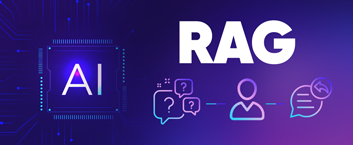
OCI Generative AI natively supports RAG patterns — allowing enterprises to connect Oracle data sources to LLMs for accurate, context-aware responses within their existing Oracle Cloud tenancy. Key OCI components in a RAG architecture:
• OCI Object Storage — stores source documents, PDFs, and unstructured content that feeds the RAG knowledge base
• OCI Data Science — manages the embedding model and vector generation pipeline
• OCI OpenSearch or Oracle Database 23ai — serves as the vector store for semantic retrieval, with Oracle Database 23ai providing native vector search within the same database that stores your enterprise data
• OCI Generative AI service — hosts the LLM that generates responses from retrieved context
• OCI API Gateway — manages secure access to the RAG pipeline for connected applications and agents
Within Oracle AI Agent Studio, the Document Tool connects AI agents directly to document repositories — enabling agent-level RAG without requiring separate pipeline engineering. Agents retrieve relevant document context automatically based on user queries, grounding every agent response in your enterprise knowledge base rather than LLM training data alone.
Enterprise Use Cases: RAG for Knowledge Management and Support
RAG is delivering measurable value across enterprise functions and industries:
RAG-powered support agents retrieve from support transcripts, knowledge bases, and product documentation to give real-time, accurate responses — reducing resolution time and eliminating the outdated or incorrect answers that erode customer trust in AI-powered service.
Medical AI systems search through clinical journals, treatment protocols, and research databases to help clinicians find relevant studies and evidence-based recommendations — grounded in current medical literature, not training data from years earlier.
RAG agents interpret financial reports, investor filings, regulatory guidance, and market news to guide decision-making — with every response traceable to the specific source document that informed it.
Employees ask questions about benefits, leave policies, and workflows in plain language. RAG agents retrieve from the current HR policy library and return accurate, policy-grounded answers — reducing HR team query volume significantly.
Geological and drilling data analysis — RAG retrieves from technical reports, survey data, and operational records to support exploration and production decision-making with current, asset-specific intelligence.
Chatbots answer location-specific questions — beach conditions, nearby amenities, trail availability — by retrieving from live data feeds rather than static training knowledge. Time-sensitive answers that standard LLMs cannot provide.
Building Production-Grade RAG with Rapidflow and Oracle AI
Rapidflow designs the retrieval architecture, configures vector embeddings, connects Oracle data sources, and builds production-grade RAG pipelines within Oracle OCI and Oracle AI Agent Studio environments.
Our RAG implementation approach covers:
- Enterprise knowledge audit — mapping all relevant data sources including Oracle Fusion records, SharePoint libraries, PDF repositories, ERP data, and external feeds that should inform RAG responses
- RAG architecture design — defining the retrieval pipeline components within Oracle OCI including storage, embedding model, vector database, LLM, and API gateway layers
- Embedding model selection and configuration — choosing the right embedding approach for your document types and query patterns within OCI GenAI
- Vector database setup — configuring Oracle Database 23ai vector search or OCI OpenSearch as the retrieval layer based on your infrastructure and latency requirements
- Document chunking and indexing strategy — designing how source documents are split, embedded, and indexed to maximize retrieval precision for your use cases
- Oracle AI Agent Studio Document Tool configuration — connecting AI agents to RAG-enabled knowledge bases for agent-level retrieval within Oracle agentic workflows
- Retrieval quality testing — evaluating precision, recall, and hallucination rate across representative query sets before go-live
- Data governance and update workflows — establishing processes for keeping the knowledge base current, removing outdated content, and maintaining retrieval accuracy over time
- Integration with Oracle Fusion Cloud applications — embedding RAG-powered responses within Finance, SCM, HCM, and CX workflows
- Production monitoring — tracking retrieval accuracy, response quality, and knowledge base health with ongoing optimization support